


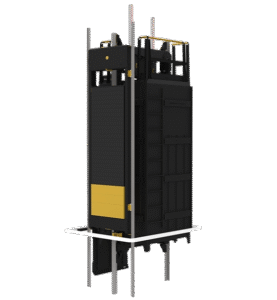

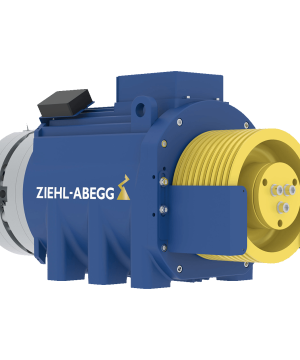
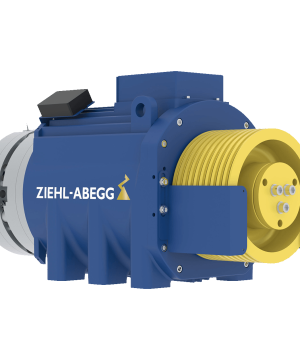
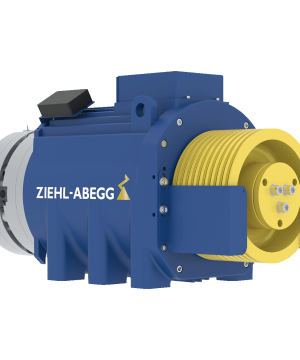
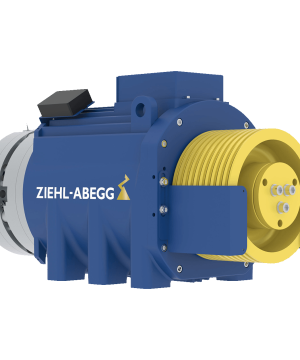
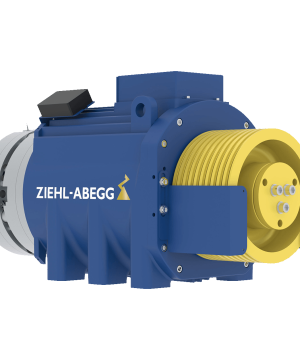
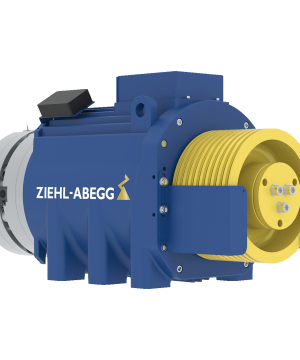
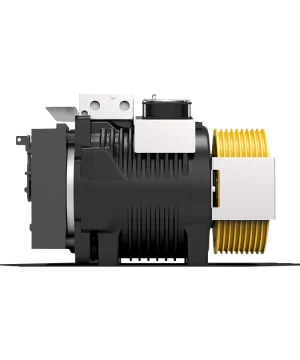
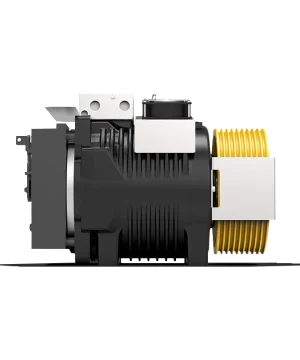
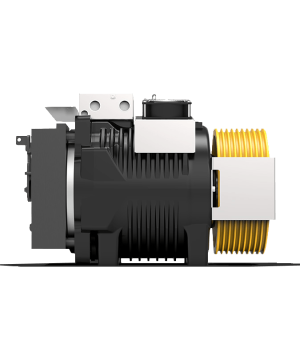
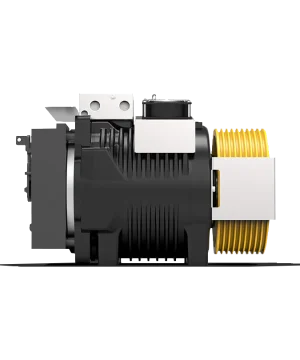
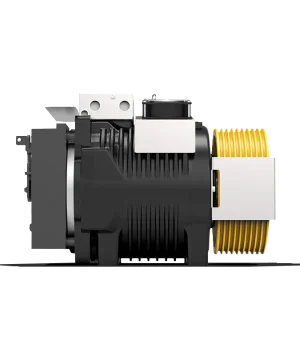
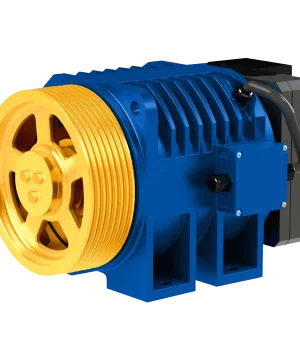
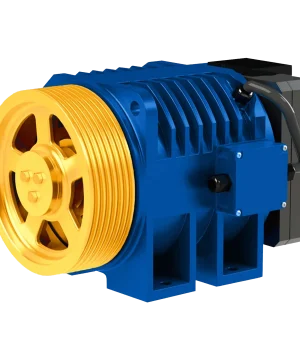
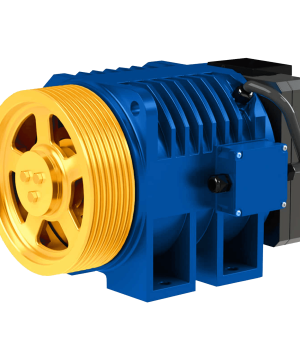
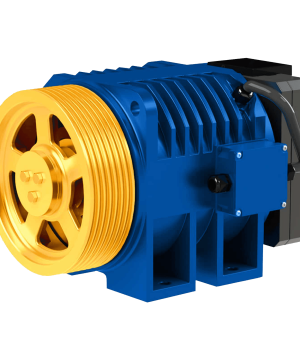
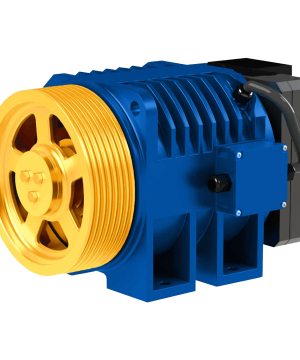
The Elevator Motor is the Heart of the Drive System, Responsible for Generating Mechanical Power to Move the Cabin Vertically. Choosing the correct type of motor has a direct impact on the elevator’s performance, safety, and energy consumption.
The elevator motor is an electromechanical device that converts electrical energy into mechanical energy to move the elevator cabin up and down. This motor is usually installed in the machine room or at the top of the elevator shaft and, depending on the type of drive system, is divided into two main categories: Geared and Gearless.
Types of Elevator Motors
- Geared Motor:
- In this type, the motor is connected to a gearbox that reduces rotational speed and increases torque.
- Suitable for mid-rise buildings with a limited number of floors.
- Normal speed ranges from 0.63 to 1.6 meters per second.
- Requires periodic lubrication and maintenance.
- Gearless Motor:
- Lacks a gearbox and is directly connected to the traction sheave.
- Suitable for high-rise buildings and high-speed elevators (up to 6 meters per second).
- Lower energy consumption, quieter operation, and longer lifespan.
- Higher cost and requires an advanced controller.
- Hydraulic Motor:
- Used in hydraulic elevators, powering the hydraulic jack.
- Suitable for low-rise buildings (up to 5 floors).
- Easy installation but higher energy consumption and requires a dedicated space for the oil tank.
Main Components of an Elevator Motor
- Stator and Rotor: Electromagnetic parts that generate a magnetic field and create rotational motion.
- Electromagnetic Brake: Ensures precise stopping of the cabin at floors and prevents unwanted movement.
- Traction Sheave: The component through which the ropes pass and controls the cabin movement.
- Cooling Fan: Prevents the motor from overheating during prolonged operation.
Important Parameters in Motor Selection
- Cabin Capacity: Based on cabin weight and number of passengers.
- Building Height: Determines the type of motor and required speed.
- Number of Stops: Affects motor power and controller type.
- Type of Usage: Residential, commercial, hospital, or industrial elevator.
Advantages and Disadvantages of Motor Types
| Motor Type | Advantages | Disadvantages |
|---|---|---|
| Geared | Affordable, suitable for mid-rise buildings | Noisier, requires more maintenance |
| Gearless | Lower energy consumption, quiet, long lifespan | High cost, requires advanced controller |
| Hydraulic | Easy installation, suitable for low-rise buildings | High energy consumption, height limitations |
Elevator Motor Maintenance and Servicing
- Periodic Inspection: Check brake condition, lubrication, motor temperature, and electrical performance.
- Replacement of Worn Parts: Such as bearings, cooling fan, and electronic components.
- Controller Adjustments: To optimize energy consumption and reduce wear and tear.
Conclusion
The elevator motor is one of the most critical components of a building’s vertical transportation system. A precise understanding of motor types, features, advantages, and maintenance requirements can help in optimal selection, enhance safety, and reduce operating costs. Choosing the right motor should be based on technical conditions, building type, and the elevator’s performance requirements.
